



Ep Sublimation Ink
Jumbo paper factory manufacturer in Guangzhou City China who Covering an area more than 20,000sqm.We are committed to producing, slitting, and selling all kinds of sublimation paper, as well as protective paper for roller heat press machine transfer.There is an independent coating workshop to coat the paper, and the quality inspection department checks the quality of the paper. It produces the base paper of sublimation paper. Finally, it is transported to the slitting workshop for slitting into rolls of paper of different widths and meters.In this way we could control the quality from every step.
Why Choose Us
Quality Control
Jumbo paper factory manufacturer in Guangzhou City China who Covering an area more than 20,000sqm.
Quality Control
There is an independent coating workshop to coat the paper, and the quality inspection department checks the quality of the paper.
One-stop Solution
Provides comprehensive services, including initial consultation, production follow-up, and after-sales service, to offer you a one-stop solution.
24H Online Service
Respond quickly to ensure you receive timely help and support to the greatest extent possible.

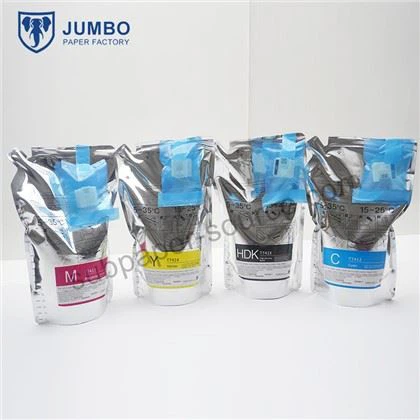
This is a Compatible Dye Sublimation Ink for Epson Large Format F Series Printers.The ink is by bag with one time chip each package.

1000ml T7411 Refill sublimation bag ink with chip For Surecolor F6000 F6070 F6200 F6270 F9200 F9270 Printer,the color can be 98% similar to the original epson sublimation ink.

Ink for Epson Sublimation Printer
Ink for epson sublimation printer have many types.The one we supply sublimation ink by bag with chip for Epson surecolor F series printer.
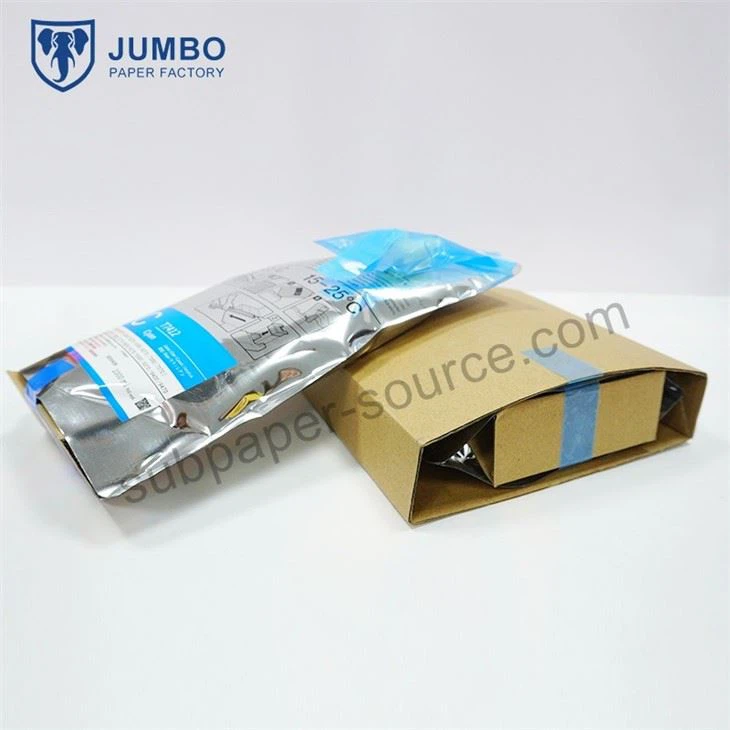
1000ml Digital printing surecolor F6200 ink for sublimation inkjet printer ink epson f series.
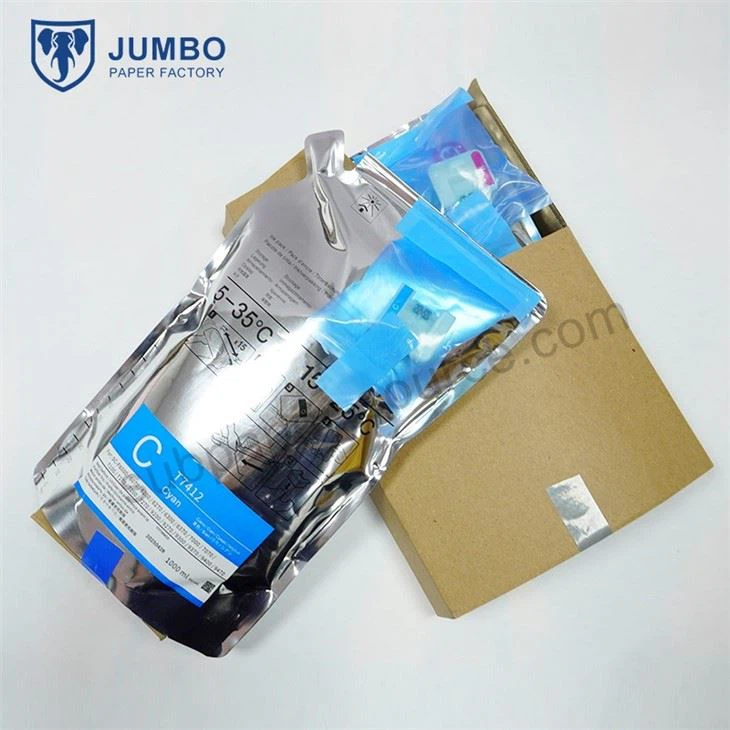
Surecolor T7270 Sublimation Ink
Surecolor t7270 sublimation ink bag have 4 color C M Y and HDK,the ink is package with chip 1000ml each liter.

Sublimation ink with chip For EPSON T741X/T742X Surecolor F6000 F6070 F6200 F6270 F7000 Printers

High Quality Sublimation Dye Ink cmy hdk surecolor f series ink for Epson large format printer.

High Quality Sublimation Dye Ink cmy hdk surecolor f series ink for Epson large format printer.

For sublimation printing for epson printer,the Dye sublimation ink for epson printer is important for printhead.
The definition of EP sublimation ink is based on the dye sublimation printing process, in which heat and pressure are being used in a way that turns the ink directly into a gas without first liquefying it. The high temperature allows the ink to transfer onto items without migrating, cracking or smudging, as the ink becomes an integral part of the printed product and does not fade or wash off over time. This makes sublimation inks highly reliable and durable, in addition to the high level of accuracy that can be reached using this type of ink and printing technique. The long-lasting sublimation ink is highly recommended for a variety of printed products, such as T-shirts and other garments, including those made of polyester.
Benefits of Ep Sublimation Ink
Vibrant Color Reproduction
Ep Sublimation ink produces prints with exceptionally vibrant and true-to-life colors.The sublimation process allows the dye to penetrate deep into the substrate, resulting in excellent color saturation and clarity.
High-Resolution Printing
Ep Sublimation ink enables high-resolution printing, allowing for sharp details, smooth gradients, and photo-quality images.This makes it suitable for printing intricate designs, photographs, and graphics with fine lines and textures.
Durability and Longevity
Prints created with Ep sublimation ink are highly durable and long-lasting.The dye forms a permanent bond with the substrate, making the prints resistant to fading, cracking, and peeling.This durability makes them ideal for applications that require frequent washing or exposure to outdoor elements.
Eco-Friendly and Cost-Effective
Ep Sublimation ink is typically water-based and produces minimal waste during the printing process.It eliminates the need for screens or plates, reducing setup costs and allowing for on-demand printing of custom designs without additional expenses.Additionally, the durability of sublimation prints reduces the need for reprinting, further enhancing cost-effectiveness.
Dye-Based Sublimation Ink
This type of sublimation ink fuses into the textile fabric during the sublimation process. They are the best option when you want to print a design onto silk, linen, or wool fabric.
Pigment-Based Sublimation Ink
Pigment-based inks have small color particles that bond to the fabric's surface when subjected to heat during the sublimation process. If you want to print a design on a polyester or nylon fabric, you can go with pigment-based sublimation ink.
Disperse Dye Sublimation Ink
Such dyes are a type of non-migrating dyes that permanently bond to fabric fibers without changing its appearance or texture. They are great for screen, thermal transfer, and pad printing.

Application of Ep Sublimation Ink

Cosmetics Industry
Ep Sublimation ink is used in the cosmetic industry in the form of unique designs on makeup product packaging like perfume bottles, lipstick cases, powder boxes, etc. Sublimation printing technology is used in this industry to incorporate vibrant designs, which have a direct effect on boosting the sales.
Textile Industry
Textile industry is one of the top industries to use Ep sublimation ink as a part of the sublimation process. Items like t-shirts are printed with logos, patterns, and images with the help of sublimation printing. Sublimation printing allows design printing directly on the fabric without the need for any other special chemicals or equipment.
Garment Industry
Another similar industry where Ep sublimation inks find their application is the garment industry. They are used here due to the vibrant and bright colors they impart. When properly cared for, garments printed with sublimation ink can last pretty long without changing their appearance.
Colourants
These are the pigments or dyes that colour the ink. Colourants can be organic or inorganic compounds chosen for their brightness, hue, and lightfastness.
Solvents
These liquid components dissolve the colourants and help the ink flow through the printer's nozzles. They can be water-based, oil-based, or a combination of both.
Binders
These help the ink adhere to the printing material and form a durable image. Binders can be natural or synthetic. Manufacturers select different options for their adhesion properties.
Additives
These modify the ink's properties and improve its performance. Examples of additives include surfactants, which help the ink spread evenly on the printing material, and humectants, which prevent the ink from drying out.
Comparing Ep Sublimation Ink and Regular Ink
Composition Differences
While both sublimation ink and dye ink play a crucial role in the printing process, their compositions are distinct. Sublimation ink comprises a dense blend of carrier fluid and solid dye particles that enables it to bond with polyester and poly-coated materials. On the other hand, dye inks are designed for a different purpose, maintaining their unique characteristics.
Printing Process Differences
The printing processes for sublimation ink and regular ink also differ significantly. Sublimation printing requires heat and pressure to transfer the ink onto various surfaces. In contrast, inkjet printing uses ink droplets to create images on paper.These divergent processes reflect the unique characteristics and applications of each type of ink.
Application Differences
When it comes to applications, sublimation ink and regular ink each have their strengths. Sublimation ink is ideal for printing on various materials like fabric, ceramics, and metal. Regular ink, however, is best suited for paper-based printing applications.Thus, the choice between sublimation ink and regular ink will largely depend on the material you intend to print on and the durability of the print you desire.
How to Choose Ep Sublimation Ink


Anti-sedimentation
Dye sedimentation in the ink will seriously affect the quality and stability of the ink, which can easily lead to print head blocking, so quality ink must have good resistance to sedimentation.
Confirm the printhead model
One sublimation ink can not fit all printer models, in the purchase of ink before you usually need to confirm your print head model, choose a sublimation ink compatible with it.
Smoothness of printing
The smoothness of the ink is the value of one print length and area. Smoothness determines the print quality and print paper's continuous length. By the production standards for inkjet printing ink, the general ink dye particle size can not be greater than 0.1μm, below this standard may appear on the printer plugging phenomenon, and the ink quality will be greatly reduced.
Color reproduction rate
Sublimation inks transfer images to products mainly through the properties of thermal sublimation, so the color reproduction rate is one of the very important factors. The higher the color reproduction rate, the higher the color saturation of the pattern transferred to the product. The high-quality ink is the only way to ensure the transfer of the right colorful, richly layered patterns to create excellent visual effects. For sublimation transfer ink, black ink is the easiest to off-color, so when choosing you can first print a black color block to check whether the color after the transfer is pure black. This is also the most direct distinction between the advantages and disadvantages of heat transfer sublimation ink important indicators.
How Ep Sublimation Ink Works
In dye-sublimation printing, Ep sublimation ink plays a crucial role in achieving stunning and long-lasting prints. The process starts with a digital image being printed onto a transfer paper using sublimation ink. The transfer paper is then placed in contact with the intended material, typically polyester fabric or coated surfaces.
When heat is applied, the Ep sublimation ink turns into a gas and penetrates the surface of the material. The ink particles then solidify, permanently bonding with the material's fibers. This results in vibrant, high-resolution prints that are resistant to fading, cracking, and peeling.
The composition of Ep sublimation ink is formulated to ensure optimal color accuracy and transfer efficiency. It typically contains a combination of dyes, pigments, and a carrier fluid that aids in the sublimation process. The ink is designed to work specifically with sublimation printers, which have heating elements that enable the ink's transformation from solid to gas.
How to Maintain Ep Sublimation Ink
Ink must be away from the fire and heat source to avoid the occurrence of accidents.
01
The storehouse is the best way to store sublimation transfer ink. Maintain a constant temperature.
02
In some cold areas, you must avoid storing the ink outdoors to prevent the ink at a low temperature.
03
Longtime storage will affect its use. Once it is opened, the ink must be used within a year.
04
The remaining ink must be sealed and store it in a dust free area.
05
Our Factory

Certifications


FAQ
Previous
Sublimation Ink For EpsonYou Might Also Like


Send Inquiry